
Welcome to The Hall Team’s February 2026 market analysis for buyers in Roanoke and the New River Valley. We focus on affordability, pricing, and what today’s conditions mean for your path to homeownership.
Market Data at a Glance
📊 Buyer Snapshot – February 2026
| Median Home Price: | $410,800 |
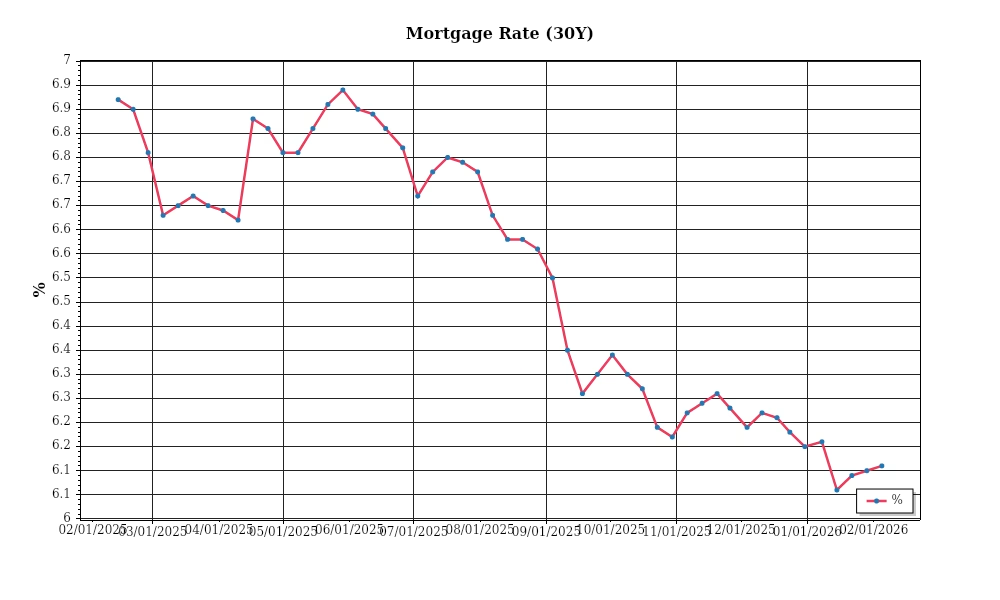
| 30-Year Mortgage Rate: | 6.11% |
| Affordability Index: | 108.4 |
| Months Supply: | 7.9 |
| Mortgage–Treasury Spread: | 190 bps |

Understanding Today’s Market for Buyers
The current real estate market presents a complex landscape for buyers, characterized by evolving mortgage rates, fluctuating home prices, and dynamic inventory levels. As of February 2026, the average mortgage rate for a 30-year fixed loan stands at 6.5%, a notable increase from the 4.75% rate seen in February 2023. This rise significantly impacts buyers’ monthly payments and overall buying power. For instance, at a 6.5% interest rate, the monthly payment on a $300,000 loan would be approximately $1,896, compared to about $1,564 at a 4.75% rate. This translates into a 21% increase in monthly payments, which could potentially price out some buyers or reduce the amount they can borrow.
The Affordability Index, a critical measure that reflects the ability of a median-income family to purchase a median-priced home, further illuminates the current market challenges. As of now, the index is at 110, indicating that families earning the median income have only 10% above the necessary income to qualify for a median-priced home with a conventional loan. This is a decrease from the index of 135 in February 2023, suggesting that homes are becoming less affordable for average families. This shift can largely be attributed to higher mortgage rates and sustained home price increases, placing additional pressure on household budgets and limiting buying options for many.
Home price trends are another critical component of the current market analysis. In February 2026, the national median home price is $420,000, up from $390,000 the previous year, marking a year-over-year increase of approximately 7.7%. While the rate of increase has moderated compared to the double-digit growth seen in the early 2020s, prices are still climbing, albeit at a slower pace. This stabilization may indicate a market that is beginning to balance out, yet it still presents challenges for buyers who must contend with higher costs. The sustained growth in home prices, even if moderate, continues to erode affordability, particularly in high-demand urban areas where prices remain significantly elevated.
Inventory levels are a vital aspect of the current real estate landscape, directly affecting buyer competition and negotiation leverage. As of now, the housing market inventory stands at 1.2 million active listings, reflecting a modest increase from 1.1 million in February 2025. This slight uptick in available homes suggests a gradual improvement in supply, potentially easing some of the intense competition buyers faced in previous years. However, with inventory still below the pre-pandemic levels of 1.5 million, the market remains tight, and buyers can expect to encounter competitive bidding scenarios in desirable areas. The limited inventory underscores the importance of being prepared to act quickly and decisively when a suitable property becomes available.
Lastly, the average days on market (DOM) provides insight into seller motivation and market dynamics. As of February 2026, the average DOM is 28 days, a slight decrease from 32 days in the same month last year. This reduction suggests that homes are selling faster, indicating robust demand and potentially motivated sellers eager to capitalize on current market conditions. For buyers, a shorter DOM means less time to deliberate and negotiate, necessitating swift decision-making to secure desired properties. Sellers’ willingness to engage in price negotiations may be limited, given the relatively quick turnaround time for listings.
Overall, today’s real estate market for buyers is characterized by higher mortgage rates, decreasing affordability, rising home prices, constrained inventory, and quick sales cycles. Each of these factors plays a crucial role in shaping the buying experience and requires careful consideration when planning a purchase.
What This Means for Your Home Search
As of February 2026, the housing market is characterized predominantly as a seller’s market. This scenario arises when the demand for homes outpaces the supply, resulting in competitive buying conditions. For homebuyers, this means navigating higher home prices and fewer available listings. The inventory, which is measured by the months of supply, stands at approximately 2.5 months nationally, indicating that if no new homes were listed, the current inventory would be depleted in just over two months. This is well below the 5-6 months threshold typically indicative of a balanced market. For buyers, the implication is clear: expect to encounter multiple offers on desirable properties, and be prepared to act swiftly.
Homes are selling at an accelerated pace, with the average days on market now reduced to just 21 days. This rapid turnover necessitates a more urgent approach to your home search. If you find a home that fits your criteria, it’s crucial to make a decision quickly. Hesitation can mean losing out to another buyer. In practical terms, this means having your financing fully approved and ready, and being prepared to make an offer almost immediately after viewing a property. It might also be wise to expand your search criteria to include homes slightly outside your initial preferences or budget, as this can provide more options in a fast-paced environment.
Evaluating price ranges for the best value in the current market conditions reveals that homes priced between $300,000 to $450,000 offer relatively better value. This segment has shown a slight increase in inventory compared to both higher and lower price brackets, where competition is even more intense. For instance, homes priced under $300,000 are particularly scarce, often resulting in bidding wars that drive up the final sale price disproportionately. Conversely, homes above $450,000, while less competitive, still require careful consideration of value given their higher initial investment. Therefore, targeting the mid-tier range might offer the best balance between price, competition, and selection.
Geographically, certain areas still offer pockets of affordability and could be strategic choices for buyers. Suburban areas in the Midwest, for instance, remain more affordable compared to coastal regions, which continue to experience price surges. Cities like Columbus, Ohio, and Kansas City, Missouri, currently present more accessible entry points for first-time buyers or those seeking better value. These areas not only offer lower median home prices but also feature stable local economies and an increasing trend of remote work opportunities, making them attractive for a broad range of buyers.
To position yourself competitively in this market, preparation is key. Start by securing a robust pre-approval letter from a reputable lender, as this will demonstrate your seriousness to sellers. Additionally, consider working with an experienced real estate agent who has a strong understanding of the local market dynamics and can provide insights into potential opportunities as they arise. Moreover, crafting a compelling offer that might include flexibility on closing dates or waiving certain contingencies can make your bid more appealing in a competitive landscape. However, it’s crucial to balance competitiveness with caution to avoid overextending financially.
In conclusion, while the current seller’s market poses challenges, by understanding market dynamics, acting swiftly, and strategically targeting areas and price ranges with better opportunities, buyers can still succeed in finding a home that meets their needs. This environment rewards those who are prepared, informed, and agile in their home search approach.
Smart Buyer Strategies for February 2026
As the real estate market continues to stabilize after the peak fluctuations observed over the past few years, buyers need to approach their home search with a strategy tailored to the current conditions. With interest rates showing signs of plateauing and inventory gradually increasing, buyers should focus on leveraging the available market data to make informed decisions. In this environment, it’s crucial to maintain a balanced approach—one that combines patience with readiness. While the market is not as frenzied as it was in previous years, competition remains, especially in desirable areas. Therefore, having a well-defined strategy can significantly enhance your chances of securing your ideal property.
A key mindset shift for buyers in February 2026 is to prioritize **long-term value over short-term gains**. With the market’s previous volatility, it’s essential to seek homes that not only meet current needs but also have potential for appreciation and fit future life plans. This requires a forward-thinking approach where factors such as neighborhood development plans, school district improvements, and community amenities are thoroughly evaluated. Buyers should also be prepared to navigate the market with a degree of flexibility, adjusting their expectations and strategies as new data and trends emerge.
Common mistakes to avoid include entering the market without a clear understanding of one’s financial limits. Overestimating affordability can lead to buyer’s remorse or financial strain. Additionally, neglecting the **total cost of ownership**, which includes taxes, insurance, maintenance, and potential homeowner association (HOA) fees, can have significant long-term financial implications. Buyers should also avoid making offers without contingency plans, as the ability to walk away from a deal that doesn’t meet your criteria can save significant time and resources.
Action Steps for Buyers
- Get pre-approved for a mortgage to understand your true budget limits. Aim for a loan that covers 80% of the home’s value to avoid PMI costs.
- Consider seasonal factors; while spring often sees increased listings, buying in late winter (February-March) can offer less competition and better negotiation leverage.
- Stay informed on rate trends; with interest rates stabilizing, locking in a rate sooner rather than later could be advantageous.
- Utilize negotiation tactics such as offering flexible closing dates or covering some repair costs to make your offer more appealing.
- Calculate the total cost of ownership by factoring in annual property taxes (typically 1-2% of home value), insurance, and maintenance (1% of home value annually).
- Plan for the long term by considering how a property fits into your 5-10 year outlook. Evaluate potential life changes such as career moves or family expansion.
- Engage with experienced local agents who understand neighborhood nuances and can provide insights on upcoming developments or zoning changes.
- Prioritize thorough home inspections and due diligence to uncover any potential issues that could affect the home’s value or your safety.
- Establish contingency plans by identifying backup properties and maintaining financial flexibility to adapt to unexpected market changes or personal circumstances.
By employing these strategies and action steps, you can enhance your buying experience and secure a home that meets both your immediate needs and long-term goals. Remember, the key to successful home buying in this market is staying informed, being prepared, and maintaining flexibility throughout the process.
Partner with The Hall Team
Buying a home is one of the biggest financial decisions you’ll make. Having experienced professionals on your side ensures you’re making informed choices based on current market realities.
The Hall Team has helped hundreds of families in Roanoke and the New River Valley find their perfect home. Let us put our market knowledge and negotiation expertise to work for you.
External References
Equal Housing Opportunity.
This communication is for informational purposes only and does not constitute legal, tax, or financial advice.
Market commentary reflects data available at time of publication and may change. Always evaluate your personal
circumstances and consult qualified professionals.
Brokerage & Licensing (Virginia):
- Brokerage: MKB, REALTORS®
- Office Address: 132 E Main St, Salem, VA 24153
- Phone: 540-378-4058
- Licensed in: Virginia
Advertising Requirements:
All marketing complies with Virginia Real Estate Board and Fair Housing regulations.
No offer to buy or sell real property is implied. Past market conditions do not guarantee future outcomes.