
Welcome to The Hall Team’s March 2026 market analysis for sellers in Roanoke and the New River Valley. We examine momentum, inventory levels, and what conditions mean for listing strategy.
📊 Seller Snapshot – March 2026
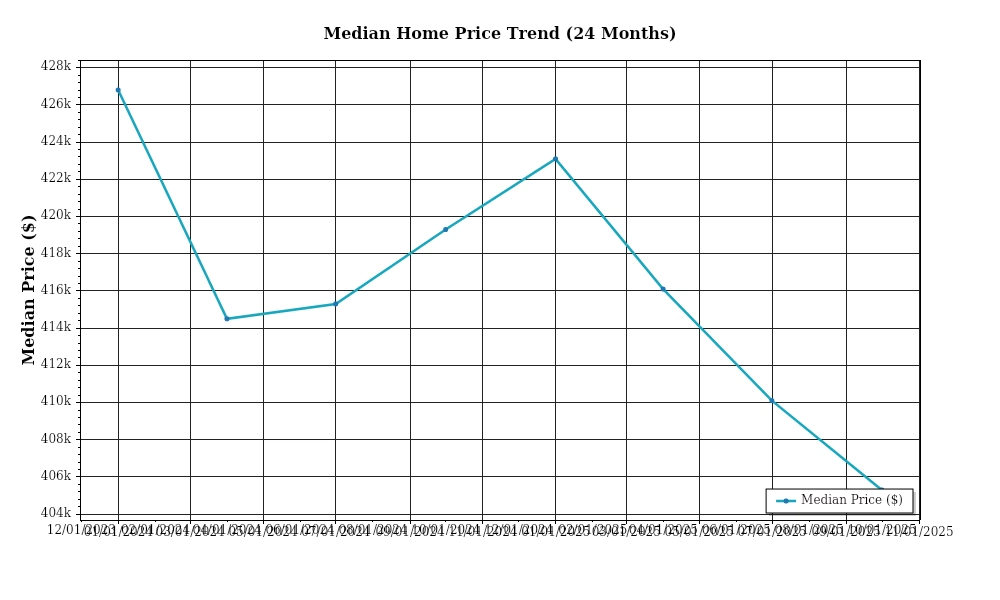
| Median Home Price: | $405,300 |
| Months Supply: | 7.6 — Buyer’s Market |
| 30-Year Mortgage Rate: | 6.00% |
| Mortgage–Treasury Spread: | 185 bps |

Strategic Insights for Sellers
Current Market Dynamics for Sellers
In March 2026, the real estate market is exhibiting distinct characteristics as indicated by the months of supply metric. Currently, the market stands at approximately 4.5 months of supply, reflecting a slight tilt towards a seller’s market but nearing a balanced market condition. The months of supply is a crucial indicator, representing the amount of time it would take to sell all homes currently on the market at the current sales pace, assuming no new homes are listed. A balanced market typically hovers around 6 months of supply. The present figure suggests that while sellers may still hold some leverage, the market is gradually shifting towards equilibrium. This transition means that sellers might face increased competition as more properties enter the market, necessitating strategic pricing and marketing to capture buyer interest.
Buyer demand trends in March 2026 reveal a pattern of moderate strength. Data from recent months shows that the number of home sales is slightly down by 2% compared to the same period last year, although there is a 5% increase in year-over-year data for the first quarter of 2026. This trend suggests a steady, if not exuberant, buyer presence. The moderate demand can be attributed to various factors, including economic conditions and consumer confidence. A moderate demand environment indicates that while there are active buyers in the market, sellers may need to be more competitive and strategic, particularly with pricing and home presentation, to ensure a successful transaction.
In terms of price trends, the market has experienced a healthy appreciation rate. The median home price as of March 2026 is $425,000, reflecting a 7% increase over the previous year. This appreciation rate, while robust, has slightly decelerated compared to the double-digit increases seen in the frenzied market of the early 2020s. The cooling in price escalation suggests a stabilization phase, where prices are aligning more closely with historical norms. For sellers, this presents a dual opportunity: capitalizing on accumulated equity while also adjusting expectations for future gains. An understanding of local price trends and the competitive landscape is essential for setting an attractive listing price that resonates with current buyer expectations.
Current mortgage rates are exerting a notable influence on the buyer pool size and their purchasing power. As of now, the average mortgage rate for a 30-year fixed loan is hovering around 5.5%. This is a significant increase from the historic lows observed in the early 2020s, where rates were often below 3%. Higher interest rates have a direct impact on affordability, effectively reducing the maximum loan amount buyers can qualify for, and thereby shrinking the buyer pool. Sellers should be aware that the increased cost of borrowing may lead to more price-sensitive buyers, potentially affecting the time a property spends on the market and necessitating a more value-driven approach in marketing and negotiations.
Seasonal factors and timing considerations are also at play as the market enters the spring season. Historically, spring is a peak time for real estate transactions, characterized by increased buyer activity and a higher number of listings. In March 2026, this seasonal upswing is expected to bring more competition among sellers, as inventory levels typically rise during this period. For sellers, this means timing is critical; entering the market slightly before the peak spring rush can position a property advantageously, capturing early-bird buyers before the market becomes saturated. Additionally, understanding local market rhythms and aligning listing strategies with these patterns can enhance a seller’s ability to attract serious buyers and achieve favorable terms.
Strategic Positioning in March 2026
As we analyze the real estate market in March 2026, it’s evident that the market remains a seller’s market. The limited inventory across most regions, coupled with sustained buyer demand, has maintained upward pressure on home prices. Sellers can capitalize on this environment by strategically pricing their properties to attract the most competitive offers. The implications for pricing are significant: while you can set your listing price higher than you might in a balanced or buyer’s market, it’s crucial to avoid overpricing. A property priced 5-10% above the market value may still attract interest, but anything beyond that risks stagnation.
The average days on market (DOM) is currently hovering around 30 days. This figure represents a robust market for sellers, indicating that well-priced properties are moving quickly. For your pricing strategy, this means aiming for a price point that aligns closely with recent comparable sales in your area. If properties are lingering beyond the 30-day mark, it could signal that adjustments are needed, either in pricing or in marketing strategies. For example, if your property remains unsold past 40 days, conducting a thorough analysis of comparable sales to recalibrate your price could be essential to reigniting interest.
When we examine which price ranges are moving fastest, properties priced between $300,000 and $500,000 are seeing the most activity. This range is particularly attractive to first-time buyers and smaller families seeking affordability paired with modern amenities. This demand is driven by a combination of stable mortgage rates and increased purchasing power among younger buyers. Conversely, properties priced above $1 million are experiencing a slower movement, as luxury markets typically have a narrower buyer pool and are more susceptible to economic fluctuations. To position your property competitively within these fast-moving brackets, consider enhancing features that appeal to the target demographic, such as energy-efficient systems or smart home technologies.
To position your property competitively in this market, focus on its unique selling propositions. Highlight features that set it apart, such as a newly renovated kitchen, a spacious backyard, or proximity to key amenities like schools and public transport. Use high-quality photos and virtual tours to showcase these features online, as digital presence significantly influences buyer interest. Pricing competitively doesn’t necessarily mean pricing low; it means pricing in a way that emphasizes value and aligns with buyer expectations. If similar homes are selling quickly at $450,000, listing your home at $455,000 with superior finishes could capture buyer interest while maximizing your return.
Timing considerations are also crucial. March is traditionally a strong month to list properties due to the rise in buyer activity as the spring season approaches. Listing now allows you to tap into this heightened interest before the market becomes saturated with new listings in April and May. Waiting for further seasonal shifts might increase competition, which could dilute buyer attention. However, if your property requires significant improvements or if you anticipate interest rate hikes that could dampen buyer enthusiasm, it may be wise to delay listing until these conditions are optimized. Analyzing local market trends and consulting with a real estate professional can provide insights tailored to your specific situation, helping you decide whether immediate listing or strategic delay will yield the best outcome.
Maximizing Your Sale in This Market
Navigating the current real estate market requires strategic positioning to ensure sellers maximize their property’s value. With fluctuating inventory levels and buyer demand, it is crucial to highlight the unique aspects of your property that cater to current market trends. Properties that emphasize energy efficiency, modern amenities, and flexible spaces that cater to remote work are particularly appealing. Given the sustained interest in these features, positioning your property as a solution to these buyer preferences can significantly boost its appeal.
One of the key competitive advantages in today’s market is the ability to stand out through high-quality presentation. Investing in professional photography and virtual tours can create an immediate impact, capturing the attention of buyers who are increasingly initiating their property searches online. Furthermore, ensuring your home is impeccably staged to highlight its best features can make a notable difference. This includes decluttering, neutralizing decor, and enhancing curb appeal to create a welcoming and aspirational environment.
Sellers must also be mindful of common pitfalls, such as overpricing properties in an attempt to capitalize on high demand. This can lead to prolonged listings and eventual price reductions, which may deter potential buyers. Instead, setting a competitive price based on a comprehensive market analysis can attract serious offers more quickly. Another frequent mistake is neglecting necessary repairs or updates before listing; a property in poor condition can lead to lower offers or failed inspections.
Seller Action Plan
- Set a competitive price: Analyze current local market data to determine an optimal price point. Aim to list slightly below the last comparable sale to generate interest and potentially incite a bidding war.
- Prioritize pre-listing preparations: Address any visible repairs, refresh paint with neutral colors, and consider minor upgrades to kitchens and bathrooms, which often yield high returns on investment.
- Invest in professional photography: Use high-resolution images and 360-degree virtual tours to create a compelling online presence. Properties with professional visuals receive 47% more inquiries.
- Consider timing strategically: Evaluate local market conditions to decide between listing now or waiting for a more favorable season. Spring and early fall are traditionally the best times to sell.
- Leverage negotiation strengths: Highlight recent updates, energy-efficient installations, and neighborhood amenities to strengthen your position in negotiations.
- Prepare for multiple offers: Establish clear criteria for evaluating offers, such as financing terms, contingencies, and closing timelines, to make informed decisions quickly.
- Collaborate with experienced agents: Choose a real estate agent with a proven track record in your neighborhood. Their expertise can guide you through pricing, marketing, and negotiations.
- Implement thorough disclosure and inspection processes: Provide comprehensive property disclosures upfront to build trust and reduce the risk of post-offer surprises that could derail sales.
By implementing these strategies, you can confidently navigate the current market and position your property to achieve the highest possible value. Whether handling multiple offers or competing in slower markets, being well-prepared and informed empowers you to make strategic decisions that lead to a successful sale.
The Hall Team Advantage
In any market condition, the right strategy makes the difference between a good sale and a great one. Our team combines cutting-edge marketing technology with proven negotiation tactics to deliver results.
We don’t just list your home—we create a comprehensive marketing campaign designed to attract serious buyers and generate competitive offers.
External References
Equal Housing Opportunity.
This communication is for informational purposes only and does not constitute legal, tax, or financial advice.
Market commentary reflects data available at time of publication and may change. Always evaluate your personal
circumstances and consult qualified professionals.
Brokerage & Licensing (Virginia):
- Brokerage: MKB, REALTORS®
- Office Address: 132 E Main St, Salem, VA 24153
- Phone: 540-378-4058
- Licensed in: Virginia
Advertising Requirements:
All marketing complies with Virginia Real Estate Board and Fair Housing regulations.
No offer to buy or sell real property is implied. Past market conditions do not guarantee future outcomes.